
About Vango

About Vango
In the beginning, the entire staff of Vango was me.
I had a little office under the stairs in our factory in Shettleston.
I didn’t have any high-finance ideas. I hadn’t even thought of the word ‘marketing’.
I was just striving to design and make tents that people wanted to camp in.
Alastair Moodie Snr., Founder and Managing Director 1965-1995
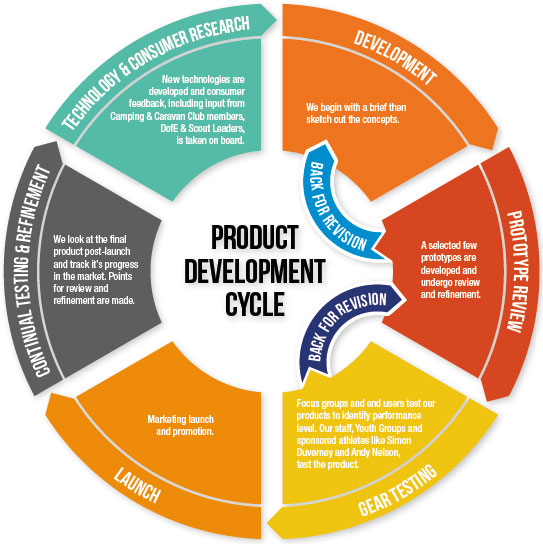
From the very beginning, Vango has been dedicated to developing the best kit on the market. We’ve worked with industry experts, outdoor enthusiasts, innovative designers and end users. We constantly monitor new technology, consumer feedback and customer research, fi nding ways to make our products even better.
Concept development can take place at various stages throughout the process, even after the product reaches the market. We develop each of our products until we are 100% happy with them. We want users to enjoy our products for many years.
We've been outdoors since 1966, join us!
Innovation
Since 1966 we’ve set the pace. We continually research what would make your outdoor experience better and we find ways to make it possible.
From quick to pitch family tents to expedition grade outdoor equipment, we’ve got it covered.
2015 – Vango AirSpeed
AirBeam® valve redesigned to further increase ease of use. Gives the most efficient attachment, ease of use, and rapid deflation.
2014 – Vango AirAwnings®
Following the success of Vango AirBeam® and AirAway® drive away awnings Vango develop a range of AirAwnings® for caravans. The inflatable awnings allow caravan owners to enjoy all the benefits that the AirBeam® technology offers; Vango AirAwnings® are quick and easy to pitch and fit. Built with premium components and fully featured, the AirAwnings® are a real addition to every caravan holiday.
2013 – Khumbu Rucksack
New for 2014, the lightweight Khumbu 50 won the 2013 UK Outdoor Industry Novel Award for Rucksack and Luggage. The Airwave back system was developed on the Khumbu for increased comfort, making it the ideal rucksack for gear intensive single days or light weight multi-day adventures.
2013 – Vango AirAway®
Vango rolled out AirBeam® technology into a range of drive away awnings. Offering rapid pitch and multiple fitting options, the Vango AirAway® range has proved hugely popular with campervan and motorhome owners alike.
2011 – Vango AirBeam®
Vango introduced the Vango AirBeam® range of inflatable tents. By using inflatable tubes instead of poles large family tents can easily be pitched by one person in a matter of minutes. Read more
2010 – Tied Arch System
Vango developed the Tied Arch System to give simple, quick to pitch tents with good usable inner space and headroom. The tepee style Appleby 500 tent utilises this technology to give a flexible living sleeping space without the constraint of a central pole. The result is a very stylish, yet practical tent.
2010 – Thermal Embrace System
Featured in our Duke of Edinburgh approved sleeping bag ranges, Latitude and Ultralite, Thermal Embrace utilises elasticated thread in the inner of the sleeping bag to gently pull the lining fabric towards the body; eliminating cold spots, and increasing loft and warmth.
2008 – Pelmet
Creating a home from home feel inside your tent, the pelmet hides away the inner attachment points from view and incorporates handy storage pockets.
2008 – Flat Pole Sleeves
Tents which pitch inner first tend to be more streamlined while flysheet first tents can be pitched as-one. By flattening the pole sleeves onto the flysheet the best points of both constructions can be included.
2007 – TLS - Thermic Loft System
An advanced sleeping bag construction, TLS was developed using synthetic insulation in an interlocked lattice.
2006 – TBS II - Versatile Tension Band System
Another version of our TBS system which now combines the cord and web together to provide more head room as well as tent stability in adverse weather conditions.
2004 – TBS PRO – Lightweight Tension Band System
A lighter weight version of the tried and trusted TBS system that utilises a cord system instead of webbing to stabilise tents in adverse weather conditions.
2002 – ASC2/ASC3 (Advanced Shingle Construction) Sleeping Bag
Applying a double or triple strata of overlapping layers in combination with advanced synthetic materials creates a thermal system that has high thermal retention. This construction technique efficiently keeps the user warmer, using less energy.
1997 – Omega® Sleeping Bag Construction
The Omega® construction produces an ergonomically shaped sleeping bag that hugs the body and is engineered to retain more heat.
1996 – ProTex®
Vango launch their own branded waterproof/breathable coated fabrics. These are premium PU coated fabric giving increased insurance against water penetration.
1995 – Bi-Radial Back System®
The Bi-Radial adjustable rucksack backsystem on the performance of the Quick-Adjust and Self-Adjust rucksack back systems
Vango also led the rucksack market with the introduction of the innovative Bi-Radial adjustable back system, continuing the success of the Quick-Adjust and Self-Adjust rucksack back systems.
1993 – Tension Band System®
Quality and performance continued to assure Vango’s position as the number one choice for tents. 1993 saw the introduction of the innovative Tension Band System® (TBS), a wind stabilisation mechanism for hoop tents. This highly effective system continues to be part of the Vango design DNA.
1987/8 – Tension Membrane System
Vango introduced the original Hurricane tent with Tension Membrane System, the forerunner of TBS.
1967 – Hytex Fabric™
Tent fabrics in the 60s were heavy. Vango developed Hytex Fabric™ from cotton and synthetic fibres to give higher performance with lower weight and smaller pack size.
1967 – Introduction of the ‘A’ Pole
Vango introduced the ‘A’ pole as an integral part of a tent. It was easier to erect, easier to get in and out and provided greater stability in high winds.
1967 – Flysheet
In the late 60s most tents on the market were imported from continental Europe and were not specifically designed for the British weather. Covered space for cooking and storage was needed for wet conditions. The Vango Force Ten tent was designed with bell shaped ends with a flysheet that came down to the ground to solve this problem.